
Portland’s Flex and R&D Space Market Is Heating Up. Here’s What’s Driving It.
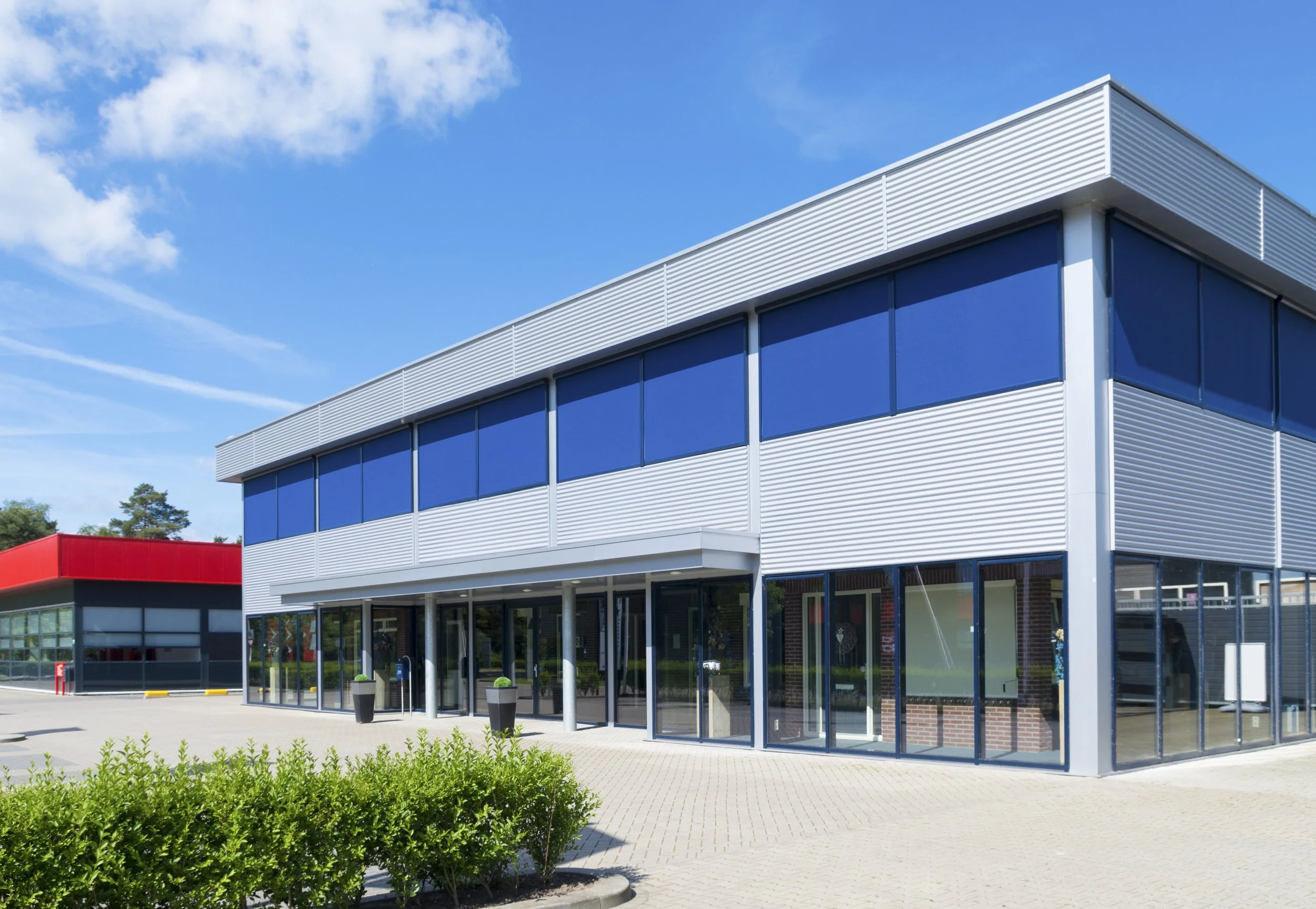
Portland’s flex and R&D space market has been one of the quieter stories in local commercial real estate — until now. A convergence of semiconductor investment, federal funding, and state-level policy is reshaping demand for a property type that has historically flown under the radar in the Portland metro.
If you’re a tenant looking for space that can accommodate lab work, light manufacturing, prototyping, or a hybrid of office and industrial use, the options are tightening. And if you’re a landlord or investor, this is a sector worth watching closely.
The Economic Picture
The catalyst is the semiconductor industry’s expansion across Portland’s westside tech corridor. Intel has committed more than $36 billion to its Hillsboro campus — the largest single investment in Oregon’s history — backed by up to $7.865 billion in federal CHIPS Act funding. The company is modernizing its technology development facilities and installing the world’s first commercial High-NA EUV lithography equipment, positioning Hillsboro’s Ronler Acres campus as the heart of Intel’s leading-edge semiconductor R&D in the United States.
But it’s not just Intel. Oregon’s CHIPS Act framework (Senate Bill 4) authorized the governor to designate up to eight sites outside existing urban growth boundaries for semiconductor and advanced manufacturing development. The more recent Oregon JOBS Act (Senate Bill 1586) would add 373 acres of build-ready industrial land in North Hillsboro — specifically for advanced manufacturing, with standalone data centers and retail warehouses explicitly banned.
This policy push signals something important: Oregon is betting heavily on building out the semiconductor supply chain, not just the fabs themselves. And that supply chain — the equipment suppliers, chemical manufacturers, testing facilities, and engineering firms — needs flex and R&D space.
Portland’s industrial vacancy has climbed to 5.7%, a 13-year high, up 110 basis points year-over-year. But that headline number masks a divergence. Traditional warehouse and distribution space is softening, while flex and R&D product is seeing steady demand from tech-adjacent users. Average industrial asking rents have risen 7.1% year-over-year to $0.90 per square foot NNN, with premium flex space commanding above $1.00 per square foot in the Sunset Corridor.
The Sunset Corridor — stretching from Beaverton through Hillsboro — remains the epicenter of this activity. With Intel’s 23,000-plus employees at its Ronler Acres campus and a growing ecosystem of semiconductor suppliers, the submarket has become increasingly competitive for flex product with adequate power capacity, clean environments, and the right office-to-warehouse ratios. Oregon is home to 15% of the nation’s semiconductor workforce, and the Portland metro’s Silicon Forest is positioning itself as a national leader in advanced manufacturing real estate.
Meanwhile, data center construction is also pulling demand into the corridor. Flexential is developing Hillsboro 5, a 358,000-square-foot facility with 36 megawatts of capacity scheduled to come online in 2026 — part of a broader infrastructure buildout that benefits the entire tech ecosystem.
What This Means
For tenants and occupiers: If your business supports the semiconductor supply chain — or any advanced manufacturing operation — the window to secure quality flex and R&D space in western Washington County is narrowing. The combination of Intel’s expansion, CHIPS Act-funded projects, and state land use changes is pulling demand into a submarket with limited new supply. Expect competition for spaces with 3-phase power, high ceilings, dock-high loading, and a 50/50 or 60/40 office-to-warehouse split. Start your site search early and build flexibility into your space requirements. Tenants who can adapt to emerging inventory — even spaces that need some build-out — will have an advantage over those waiting for turnkey options. When comparing lease proposals in the Sunset Corridor versus the Columbia Corridor, pay close attention to CAM charges and infrastructure specifications, not just base rent. A lower rate in a building without adequate power or HVAC capacity is not a bargain if you need to invest heavily in tenant improvements to make the space functional.
For landlords and investors: Flex and R&D is one of the few commercial property types in Portland with a clear demand catalyst right now. While office vacancy continues to climb and the largest office buildings in Portland have lost significant value, flex product in the right locations is positioned for rent growth and stronger tenant retention. If you own flex product along the Sunset Corridor or in areas where tech-adjacent manufacturing is growing, now is the time to assess your competitive positioning. Invest in the infrastructure upgrades — power, HVAC, clean room-ready build-outs — that semiconductor supply chain tenants need. The economic headwinds facing the broader market — rising interest rates, tariffs on construction materials, and job losses — make this kind of targeted investment even more important. Flex assets near Intel’s Hillsboro campus or along the Highway 26 corridor deserve a hard look. Conduct thorough due diligence on power capacity, zoning, and entitlement timelines before acquiring.
The Bigger Picture
Portland’s flex and R&D market doesn’t exist in isolation. It’s being shaped by the same forces driving industrial policy at the federal level — the push to reshore semiconductor manufacturing and reduce reliance on overseas supply chains.
The numbers tell the story. Intel’s $36 billion Hillsboro commitment. Up to $7.865 billion in CHIPS Act direct funding for Intel’s U.S. operations. An additional $1.8 billion in federal funding specifically for the Hillsboro campus. The Oregon JOBS Act creating 373 acres of purpose-built advanced manufacturing land. These are not speculative bets — they represent committed capital with real timelines.
For Portland’s commercial real estate market, this has implications beyond flex space. As traditional office and warehouse sectors continue to adjust — with landlords needing to rethink how they position vacant space and renewal strategies becoming more critical — flex and R&D represents a growth lane backed by federal dollars, state policy, and private investment.
The development pipeline tells a mixed story. New construction is slowing across most property types, but the targeted land supply interventions like SB 1586 suggest that flex and industrial supply in the Sunset Corridor could expand over the next three to five years. The question isn’t whether demand will materialize — it’s whether the entitlement and construction timeline can keep pace with the investment flowing into the corridor.
Portland’s vacancy picture tells two stories right now. The headline number is rising. But underneath it, the flex and R&D segment is tightening in the submarkets that matter most. Understanding that distinction is critical for anyone making leasing or investment decisions in 2026.
Need help finding flex or R&D space in Portland’s tech corridor? Whether you’re scouting locations in the Sunset Corridor, Columbia Corridor, or anywhere in the metro, I can help you evaluate options, compare lease terms, and negotiate from a position of strength. Request a free Lease Rate Analysis to see where current rates stand in your target submarket, or get a complimentary Broker Opinion of Value if you’re evaluating a flex or industrial asset.tem.